
The Truth About Buying a Finca in Spain: What to Check Before You Fall in Love
There is something about a finca.
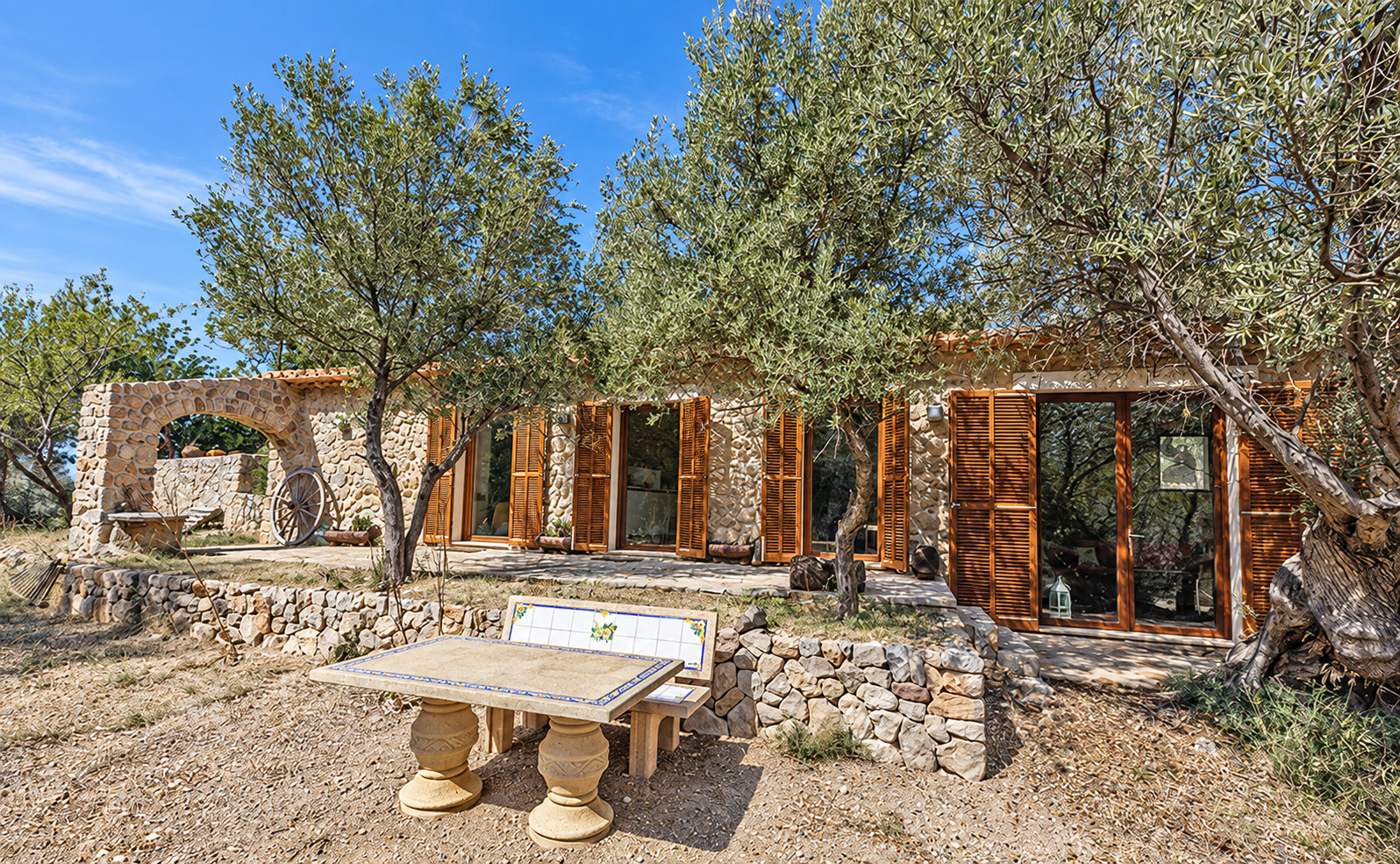
The old stone walls.
The olive trees.
The enormous wooden door that looks as though it has survived several wars, three generations and at least one determined goat.
Then there is the silence.
No traffic.
No neighbours discussing their dinner from the opposite balcony.
Just land, views and the sudden conviction that you should immediately begin making your own olive oil.
And perhaps keep chickens.
This is usually the moment sensible buyers fall completely in love.
First, What Is a Finca?
The word finca is used rather enthusiastically in Spanish property advertising.
It can describe a traditional country house surrounded by hectares of land.
It can also describe a fairly ordinary house on a rustic plot.
Sometimes it refers primarily to the land itself.
So don’t rely on the title.
Look at exactly what is being sold, how the land is classified and which buildings are legally recorded.
Does the Paperwork Match the Property?
This matters with every Spanish property.
With older country houses, it can become particularly interesting.
The house may have been extended over many years.
A covered terrace became a dining room.
A store became a guest bedroom.
A small agricultural building somehow acquired a bathroom, kitchen and Wi-Fi.
None of this automatically means you should walk away.
But it does mean your lawyer and technical advisers need to establish what exists legally—not simply what exists physically.
Catastro, the Land Registry, the escritura and the property standing in front of you may not always tell precisely the same story.
Those differences need to be understood before you buy.
Where Does the Water Come From?
Country living requires water.
Not merely for showers and coffee, but potentially for a swimming pool, garden, trees, animals and the vegetable patch you are absolutely certain you will maintain.
Ask whether the property has mains water, agricultural water, a registered well, a water deposit—or regular deliveries by tanker.
If there is a well, confirm its condition, legality and output.
If water is delivered, find out how often, at what cost and whether a tanker can reach the property easily.
The romantic stone cistern is lovely.
You still need to know whether it holds water.
Is the Electricity Mains or Solar?
A well-designed solar system can work brilliantly in Spain.
Modern batteries and abundant sunshine make off-grid living far more practical than it once was.
But “solar-powered” can describe very different systems.
Find out the age and capacity of the panels, inverter and batteries.
Ask what the system comfortably supports.
Air conditioning?
Pool equipment?
An electric oven?
A family simultaneously charging six devices while someone dries their hair?
Also check whether there is a generator and how frequently it is needed.
Living off-grid can be wonderfully independent.
It works best when the system matches the way you actually live.
How Is the Access?
You may view the property on a glorious dry morning and barely notice the final stretch of country track.
Come back after several days of heavy rain and it may have developed ambitions to become a river.
Ask who owns and maintains the access.
Is it private, shared or public?
Can an ordinary car manage it throughout the year?
Can delivery vehicles, removal vans and emergency services reach the house?
And—because this is Spain—can the water tanker get around that bend?
Land Requires Looking After
A large plot offers privacy and possibility.
It also grows things.
Constantly.
Trees need pruning.
Undergrowth needs controlling.
Terraces and boundary walls may require maintenance.
Pools, pumps, septic tanks and irrigation systems all have their own opinions about how you should spend a Saturday.
Some buyers will love this.
Others may discover that they wanted the view of the olive grove rather more than responsibility for the olive grove.
Be honest about how much land you want to enjoy—and how much you are prepared to maintain.
Can You Build, Extend or Convert?
Never assume that having plenty of land means you can build whatever you like on it.
Rustic land is subject to planning rules.
Protected land may carry further restrictions.
That appealing ruin in the corner does not automatically come with permission to become a guest house, yoga studio or tiny rural hotel.
Before planning extensions, conversions, yurts, cabins or a retreat business, obtain proper technical and legal advice.
Potential is only valuable when it is genuinely possible.
Quiet Is Not the Same as Isolated
One of the joys of a finca is feeling removed from everything.
One of the drawbacks can be feeling removed from everything.
Drive the route more than once.
Consider supermarkets, medical care, schools and the nearest place for coffee.
Check telephone coverage and internet options.
Listen for nearby roads, kennels, farm machinery and—not entirely hypothetically—cockerels.
The ideal finca offers the level of peace you want without making ordinary life unnecessarily complicated.
So, Should You Buy One?
Quite possibly.
A good finca can offer a life that is increasingly difficult to find.
Space.
Privacy.
Nature.
A slower rhythm.
A place where dinner is eaten outside, the stars are properly visible and nobody complains if your chickens develop strong personalities.
But buy the reality—not merely the dream presented during a sunny viewing.
Check the paperwork.
Understand the services.
Walk the land.
Drive the access.
Ask the awkward questions.
Then, if it all makes sense, fall completely in love with it.
Property. Lifestyle. Real conversations.
Welcome to The Renvida Way.